
We help you revitalise your school’s perception, brand, communication and enrolment journey.
We do this in a unique way: by celebrating, honouring, and unearthing the lived experience of your community.
How we support school leaders
We partner with you and your teams (usually marketing, communications and enrolments).

“Without Jacob, we would not have made the developments and growth targets we’ve achieved in recent years. I consider him a trusted extension of our team, for a fraction of the cost, and his return on investment is ten fold. He’s willing to ask the difficult questions, and that makes us better.”
David GrayDirector of Mission and Community, Belmont Christian College
Does one of these sound like your school?
“We’re a good school, but what families see doesn’t match.”
We build your website, prospectus and materials on your real story.
See how Namoi Valley Christian School captured its heart in a prospectus“We know we could do better, but we’re not sure where to start.”
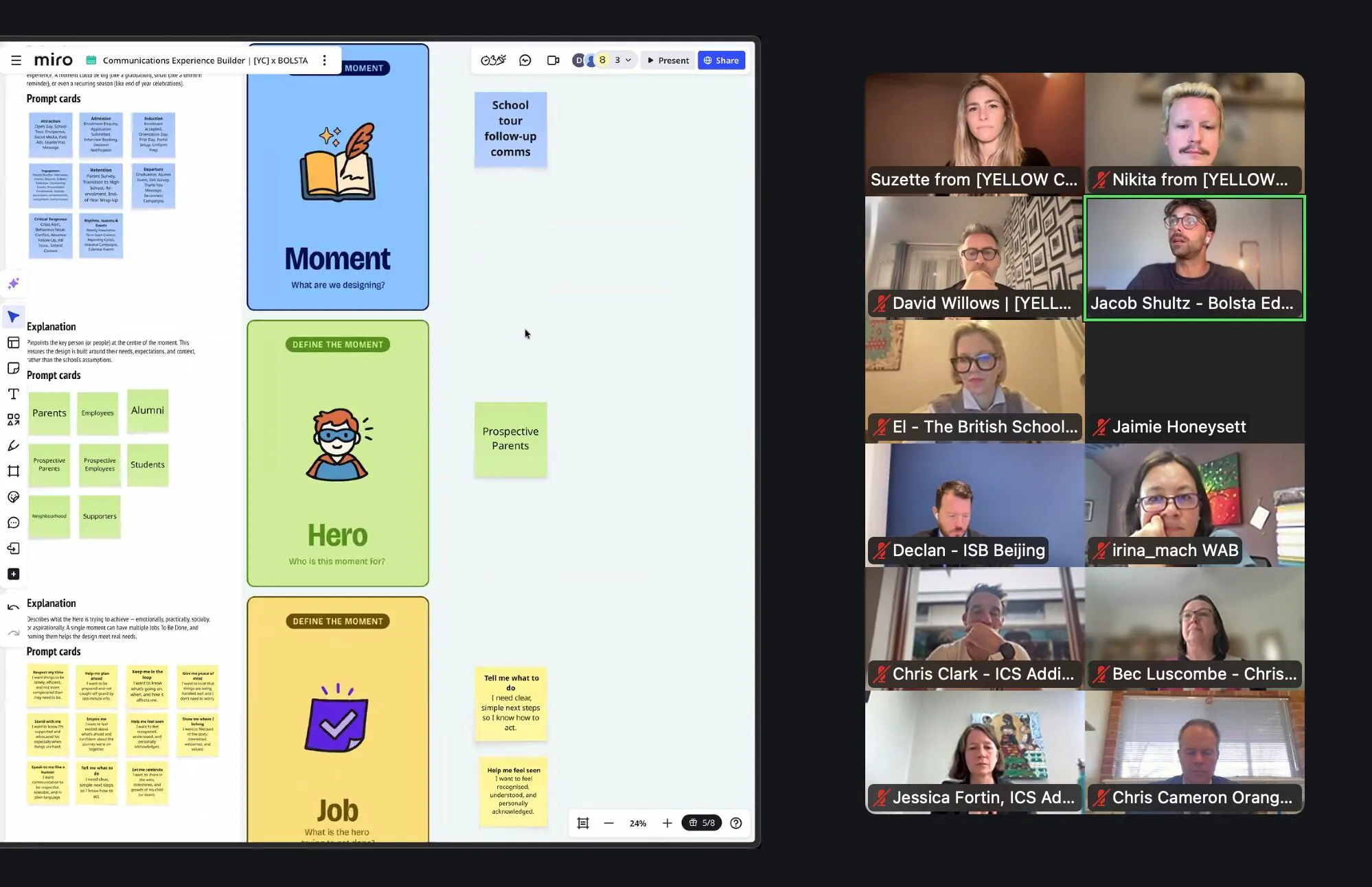
We audit your whole communication and enrolment ecosystem and bring everyone onto one shared map.
See how Torrens Valley Christian School aligned its admissions team around one focus“We want one compelling story told everywhere.”
We unearth your story by listening to your people, and build the language to tell it everywhere.
See how Belmont Christian College ran one connecting thread through a brand relaunch“We want enrolling to feel as good as being here.”
We map the journey and design its key moments so each one serves parents well.
See how MidCoast Christian College redesigned its tour around families“We need to grow our enrolments.”
We find the moves that bring more of the right people — families, and the staff to grow with.
See how MidCoast Christian College mapped a growth-ready enrolment journey“We want a deliberate next chapter.”
We build a world of language, experience and story around your vision so it embeds into culture.
See how Belmont Christian College built a purpose statement to scale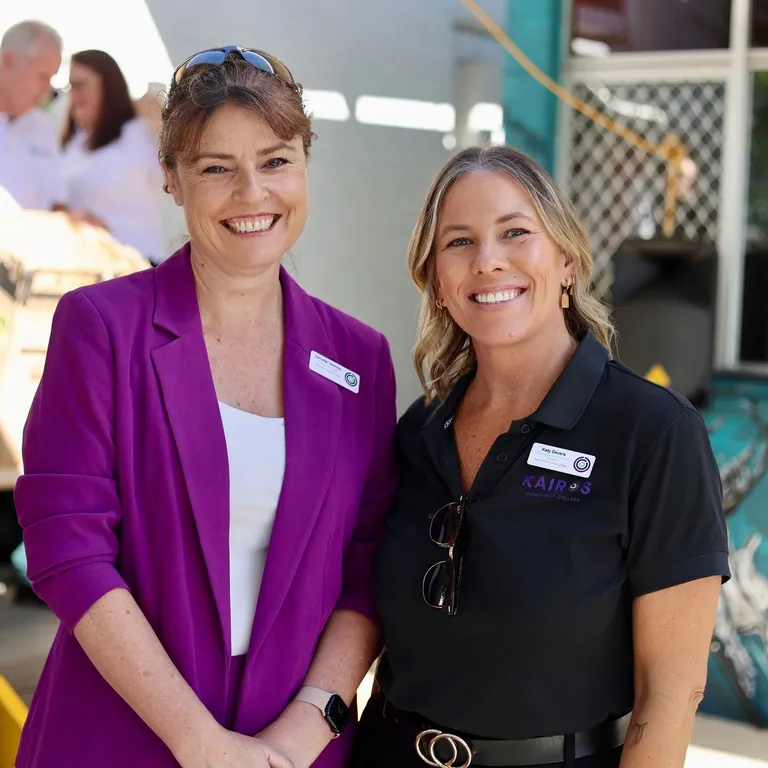
“The shift from ‘marketing’ to ‘experience’ was a real turning point for our team. Focusing on the journey has made our communication feel much more authentic.”
Katy DeversMarketing, Communications and Community Engagement Manager, Kairos Community College
Frequently Asked Questions
What does Bolsta actually do?
We help schools with their story, brand, website, and enrolment journey: the work that usually sits across marketing, communications and admissions. Rather than arriving with a campaign, we begin with the lived experience already in your community, draw it out, reflect it back, and build it into everything a family meets. Then we leave it with your team to keep telling, so the work sounds like your school, not an agency passing through.
How are you different from a marketing agency?
We’re a senior partner, not a supplier, and not quite an agency in the usual sense. A marketing agency optimises around performance metrics; a creative agency around the flashiest output. We sit in between, because for schools the work that actually moves families is human and true. It comes from holding a mirror to your community, not imposing an idea on it. So where an agency tends to start from a brief and a structured process, we start from your school, which we take the time to understand before we make anything, and the frameworks stay with your team rather than leaving with us.
What kinds of schools do you work with?
Honestly, any school. We work with small schools, large ones, and everything in between, independent, international, and public schools too. What our best clients share isn’t a size or a sector; it’s a posture: they care deeply about their community, and they want the relationship between the school and its families, current and prospective, to keep getting better. We’re especially useful to schools that don’t have a big in-house team to lean on.
How do you work with our existing team?
Alongside them, not instead of them. We’re the senior partner behind the work, building your team’s capability as we go and leaving the frameworks in their hands. The point is that you’re more able after we leave, not more dependent on us.
Where do we start?
Usually a conversation. Sometimes a single workshop is enough to get started, and sometimes an audit is the right first step to get a proper lay of the land. Either way, we like to understand your school before committing to anything significant, so the work we do together is the right work.
How do you price your work?
The right scope depends on your unique situation. We have accessible offers like workshops, through to larger multi-stage investments, and we’re always happy to talk them through on a call. We won’t string you along; it just helps to understand a little context first, so the number or range we give you is an honest one rather than a guess.
What results do schools see?
A range of things. Enrolments that grow steadily. Families who can genuinely engage with your school’s story, vision and brand rather than skim past it. Teams who come out clearer and more confident, with less admin strain, better alignment across marketing, communications and enrolment, and the language and visual systems to keep it all consistent. And often the one people mention most: room to imagine again, to lift out of the day-to-day and picture futures for the school they hadn’t let themselves picture before.
How involved will I need to be?
The work we do usually calls for strong sponsorship from leadership rather than your hands on every detail. That means you’re involved in setting the vision and the why behind a project, and in discovery or approval rounds where it makes sense. We build with you, not to you, but we don’t expect you to run the project or do the hard yards in the middle; that’s where we work closely with your teams to carry the vision through. We’re very mindful that a senior leader’s time and energy is scarce, and we shape every project with that in mind.
How do you help us bring our team and board along?
This is something we take really seriously. We care that every layer of your school, from the board to the wider team, feels invested in and positive about the work. Where we can, we ask for a direct line to those people, so we can advocate for the right outcomes alongside you and carry the technical, creative and strategic weight ourselves rather than leaving it on your shoulders. It’s where our partnership model really comes alive.
A reflection for school leaders
Leading a school is a hard job, and a strange one at times. You’re pulled in several directions at once: the board and the system above you, staff and families below, pressure to keep things steady and pressure to be seen growing. You’re a career educator, and now, in many ways, a chief executive. The buck stops with you.
So it makes sense that leaders are careful about who gets near the things that matter most: the story, the language, the way the school community is spoken to and held. The leaders I work with tend to carry a real pride in shepherding their school, and alongside it, a real aspiration: to build something, to see staff and students flourish. That tension, between protecting what’s precious and reaching for what’s possible, is where I see school leaders living.
A school leader once told me what he wanted from his school’s communication: “to celebrate and honour the good work being done in our school, and to care for our families.” A school pours enormous effort into teaching, into culture, into the small daily care of children and families. That work deserves to be told well, and told truthfully. Done right, this is less about marketing your school than making sure the story a family meets honours what your staff, students and families already live.
Getting it right is harder than it looks. You are closer to your school than anyone, and being that close makes it hard to see the way a family does. It works a little like a magician who knows the trick: once you know how it’s done, you can’t feel what the audience feels. And leaders usually come up as educators, then find themselves running an organisation. How a school tells its story and shapes its experience asks for instincts a teaching career doesn’t always hand you. You shouldn’t have to carry this part alone.
The family on the other side isn’t in the dark. Parents often can’t fully say how they choose a school, and the reasons they give aren’t always the real ones. But they aren’t clueless. They know what they want, in human terms: a safe place for their child, somewhere their kid can thrive. And they know, quickly, when the school they were promised matches the one they’re living, and when it doesn’t.
It helps to remember what a parent is choosing. A decision that might run fifteen years, cost as much as a house, for their most prized possession. Families, like all of us, want to be known. They want to feel heard, and part of something. It begins with a story told, and an experience that welcomes them in.
This is where Bolsta works with you. First, getting the promise right, with you, so what your school says about itself is true and yours, drawn out of your community rather than written at it. Then keeping that promise in the experience a family actually has, from the first enquiry through the tour and well past enrolment. The promise and its delivery, treated as one piece of work.
None of this is, at heart, a marketing problem, which is why the usual fixes, an agency engagement or a marketing hire, can disappoint. Much of what gets filed under marketing is community work in disguise. Done well, it leans on story and experience rather than pushing a message, and draws the threads between what families, students and staff already tell, so the school reads as one place rather than scattered parts.
This is a tradition as old as human history. Story has held communities together for as long as there have been communities. And at the same time it is new ground. Designing the story and experience of a school, on purpose, is an emerging craft, closer to a discipline than a checklist, even though what it deals in is deeply human. What if your school gave this the seriousness it gives teaching and learning?
The way your school is known, and the experiences it designs, are not a bolt-on to the real work. They belong alongside your other strategic pillars, your pedagogy, your compliance and risk, your wellbeing work, as a pillar of their own.
If I had to put it in one line: your school is worth experiencing, and the job is to help families feel that, not talk them into it.