MidCoast Christian College came back to us for a recruitment project, and the initial ask was simple: give us some videos of teachers being interviewed. We could do that, of course. But it was worth asking whether it was what they actually needed first. Would interviews move the needle, and what would we even ask in them? A row of teachers saying “this is a good place to work” felt thin, and we suspected there was something deeper worth exploring. We’d already done the brand messaging with MCCC, so we knew who they were as a school and what makes them tick, which is exactly why it felt right to dig a little before committing to videos.
We staged it into two workshops. The first was about working out what we were actually trying to do, and what would make the biggest difference. What we found was that they didn’t need a fresh strategy or a campaign, not because those things don’t matter, but because there was already real effort going into recruiting well. The job was to help the work already happening get the best return. And one thing stood out: MCCC is a regional school, so many of their teachers are relocating, making a significant move to be there. We could speak directly to that, and play the long game.
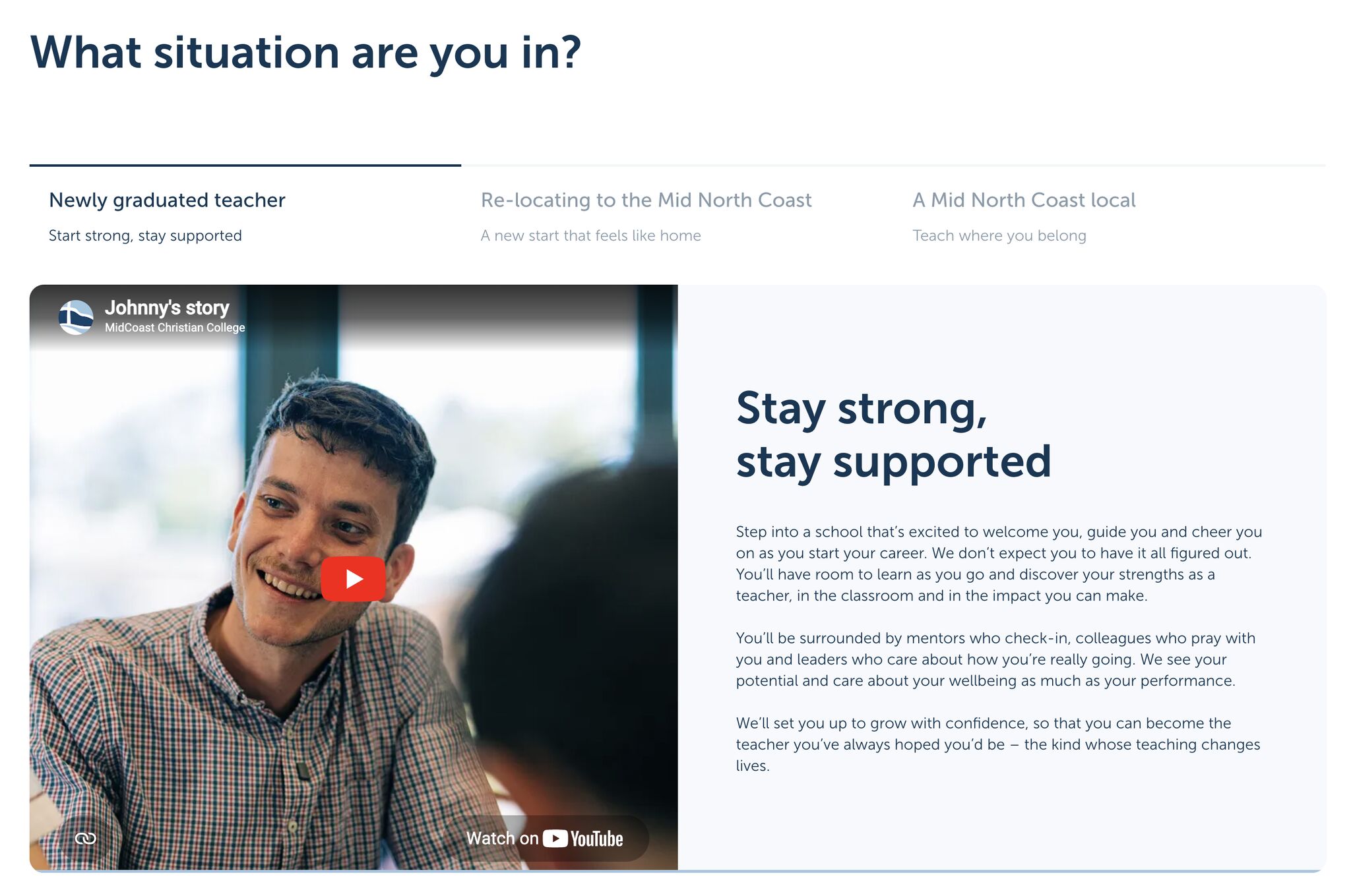
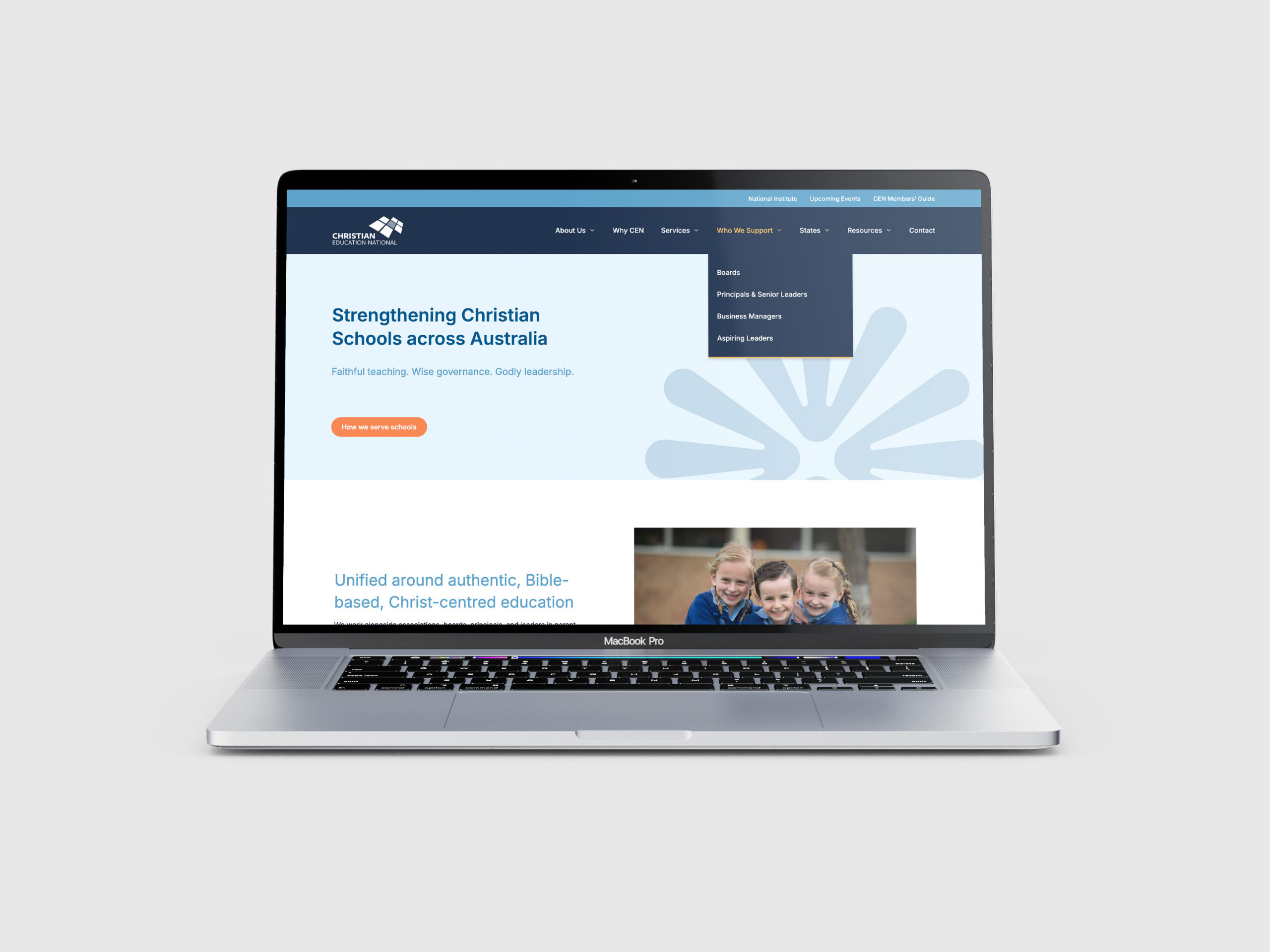
So I proposed two things back. An EVP, an employee value proposition, which is a version of their messaging strategy written for future staff rather than future families. And three videos built off the back of it. For the EVP we took the same situational approach we’d used with the peak body Christian Education National. In a room with the principal, the communications manager, and the careers lead, we worked through a custom canvas built on our Experience Builder framework: who are the heroes, what are their jobs, what frictions stand in their way, what’s the transformation, and how does the school actually answer those things. Then the question that matters most: what are the common situations these people are in when they think about teaching here? Three came out clearly: relocators, new grads, and mid-north-coast locals.
We picked three teachers in the school, one for each situation, and spent a day with each of them. Not static talking-head interviews. MCCC’s character is community-driven, everyone knows everyone, that good old town Aussie charm, so we followed each teacher through their day, something like an episode of The Office, asking questions on the move, in the context of their actual work. A couple of talking-head moments, but mostly the chronology of a real day, with photography shot along the way. Out of it came four films, one for each teacher and one that brings them together, plus a photo suite featuring the same people.
I talk a lot about building ‘brand worlds’, and that’s what this was: a small world built around three real people, telling the story of why MCCC is a great place to work. The point is specificity. Not “I love working here”, but “I’m a new grad, and here’s how this school helped me become a better one.” Each film answers the actual fears, frictions, and jobs of a teacher in that situation. And the strategy set up the long game: an always-on recruitment journey, including a way for future teachers to signal their interest before a role ever opens.
Teachers choose schools the way families do: on story, culture, and fit. The experience you design for your community extends to everyone who encounters your school, including the people you want to hire. Good creative matters, but the truthfulness of the message matters more. The last thing you want is a story that feels one way in the video and another way on site. Slowing down, asking what’s actually needed, and building from real situations and real people is how you make sure the two match.