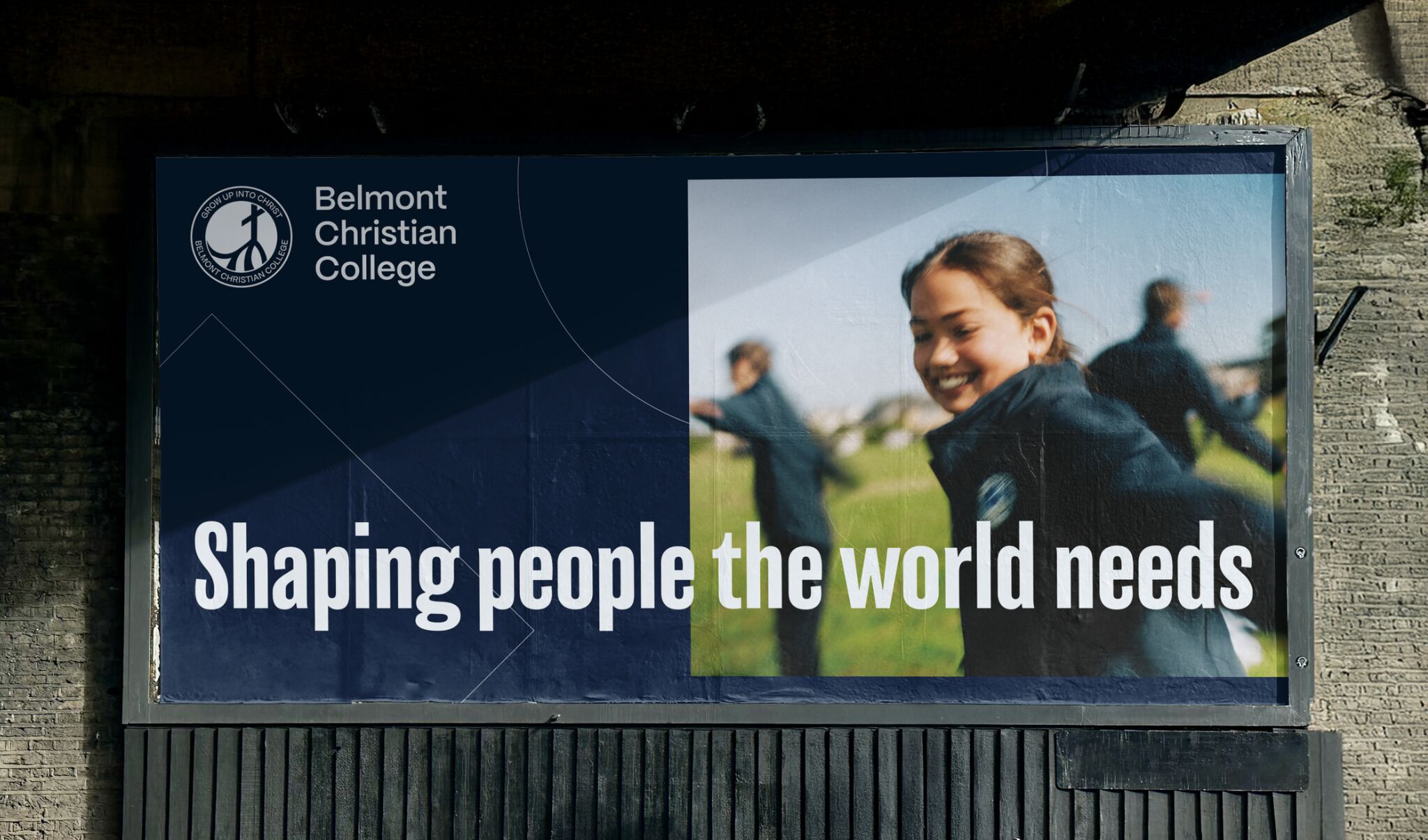
Off the back of an Enrolment Journey Audit, the first major project was a brand strategy. With multiple projects in the roadmap reliant on a well written and understood brand strategy, we saw this as a major ‘unblocker’ to future work.
The school had nearly doubled in five years and its story – largely inherited over time with minimal intentionality – hadn’t kept pace with what it had become.
This was our first intentional shift towards a “bottom-up” brand strategy, and we were delighted with the results. We didn’t change the school’s values. We didn’t touch the vision or the mission. We focused on the experience of the school. The thinking was simple: if this brand is going to show up in the school every day, it should be like holding a mirror to what it’s like to be there.
So the work started with listening. We ran workshops with the Executive team, with students, and with parents, all about extracting the language, the stories, and the experiences that make the place special to them. And we road-tested ideas with them along the way, everything from mood boards to taglines to specific types of language, asking how it made people feel. By the end we’d captured so much that the strategy doubled as a record of the school’s own language and stories.
In, we explored a new concept: Experience principles. We see those as the lived truths about what it’s like to be part of the school. This is something we are using more and more with schools.
We also explored signature offers, which are the concrete things the school does that families can actually point to.
The messaging pillars were built directly from these, which means the way the school talks about itself traces straight back to real experiences and real offers.
When I presented the story back for the first time, the business manager had tears in his eyes! While I’d love to say it was our expert writing (perhaps it was, a little), I suspect it was more that the ‘mirror’ – holding his experience and knowledge of the place back to him – was an incredibly moving moment.
This is our superpower.