Re-branding is hard (and rewarding) work. Transitioning to the ‘Rollout’ phase is a particularly important move. Often there’s this sense of getting to the end of the visual identity, everyone’s pleased, and then realising that the work is just beginning… right, what do we actually do with this? How do we launch the thing?
Planning a brand rollout well takes a lot of energy and careful thought. It’s not just creating the assets, but communicating the change out to the community, phasing the launch, and co-ordinating the various channels and suppliers.
For schools, I’m a big proponent of phased/staged launches. You don’t go too big too quickly. Some parts of a brand change are harder than others, uniform being the classic, and those are worth working through very deliberately.
The communication of the change to the community is something we spend a lot of time on too, because that’s what determines whether a rebrand is received as a good-news story or as something done to people.
Ultimately, a good brand rollout is something that runs smoothly, that excites or inspires people, and that takes your community on a meaningful journey.
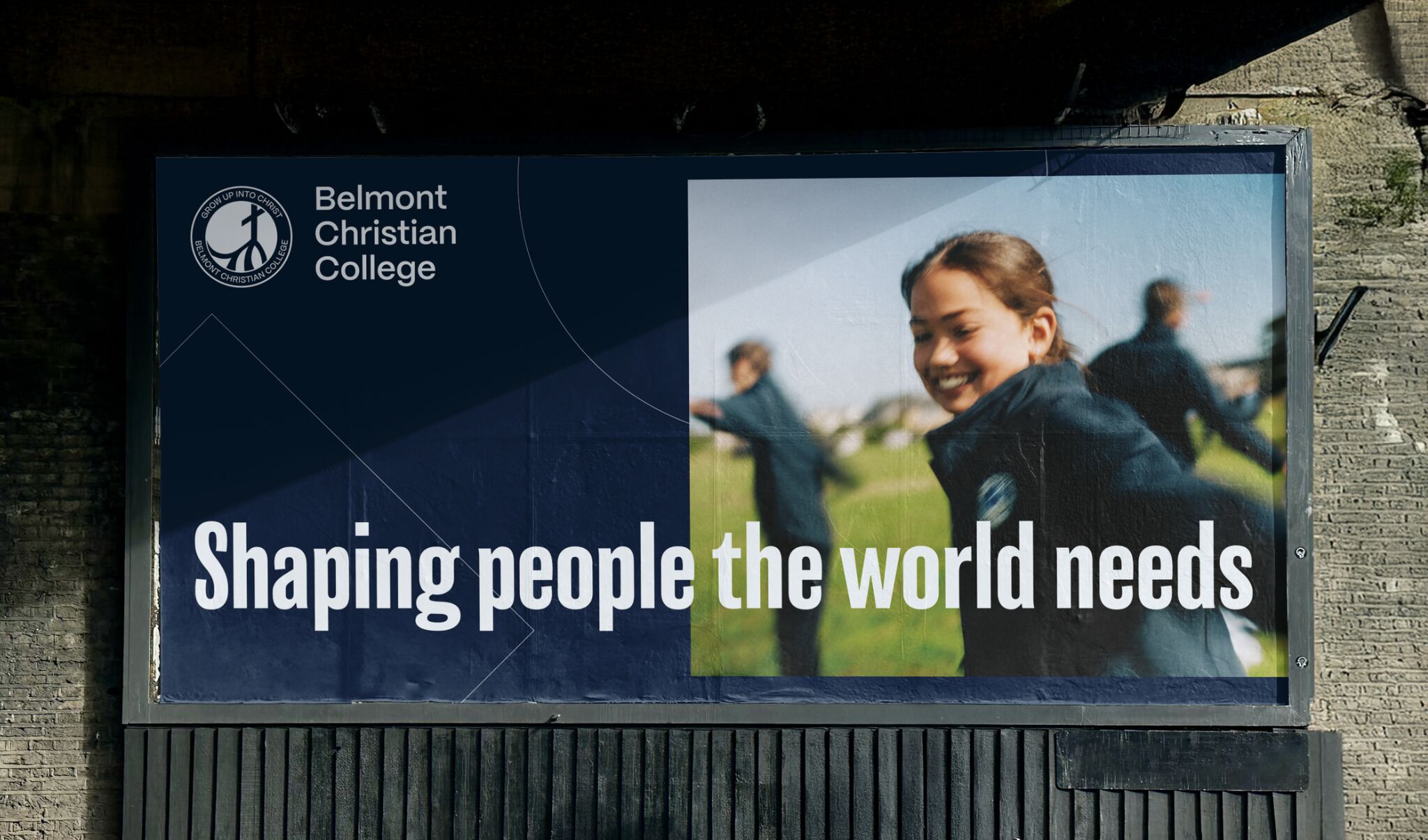
When we planned BCC’s rollout, we sat down and went through everything: slide templates, usage guidelines, Canva template packs, stationery, signage – the basics that equip a school to make its own material. Font defaults set across all computers, splash screens on the IT services and the student management system.
Even down to photo treatments, if a school has an internal photographer, we give them guidance on the editing style to use. It’s the generative approach: we want to empower the school to create things, but with the guardrails that keep it all on brand.
I describe it to schools as a bit like ordering a kebab. Here are all the ingredients. You pick the ones you want, and we help you think through which ones are useful now and which will be useful later.
So the job is to equip the school to launch strong, but in a way that’s sustainable for everyone involved, and that carries the community with it. When people see their own story reflected in the change, they don’t feel blindsided. The new brand lands as a positive, which is exactly what it should be.