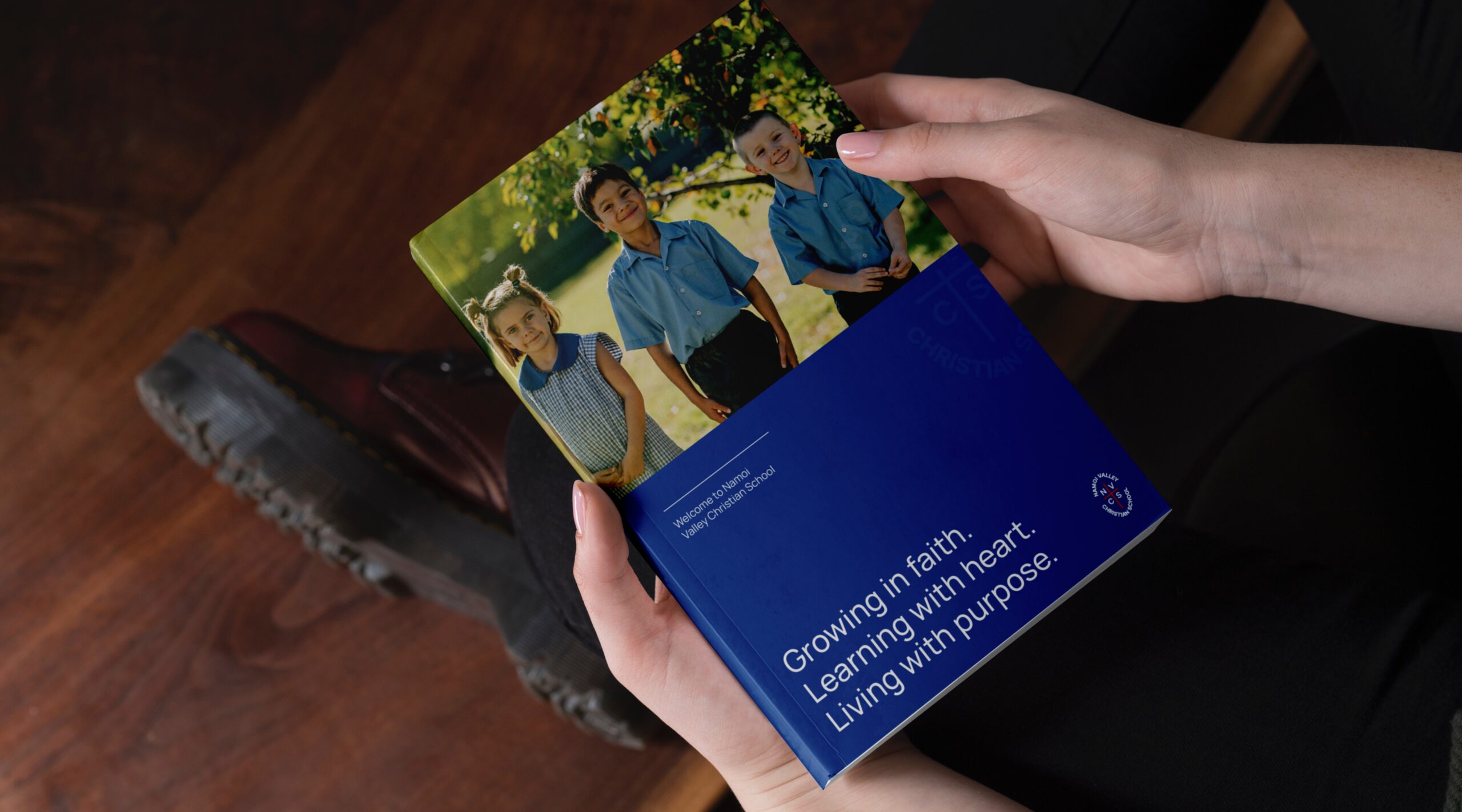
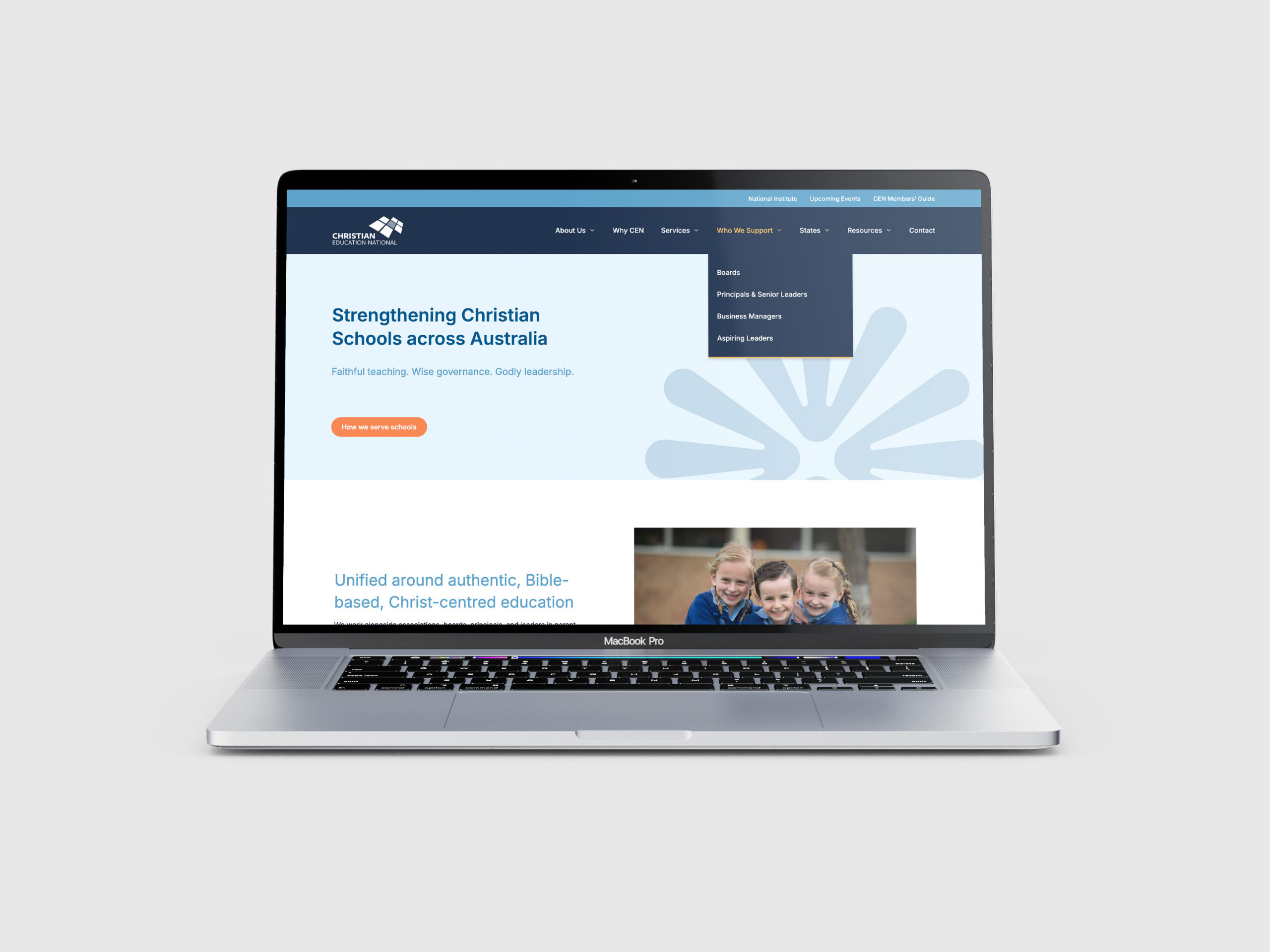
Same curriculum. Similar facilities. Comparable fees. Overlapping values. This is not an ad for Industry Super.
The convergence problem
Schools become more alike over time. DiMaggio and Powell called it institutional isomorphism; Glenn Savage traced it through Australian schooling. Regulation pushes schools toward the same structures, imitation fills the gaps (one school launches an extension program, three follow; one redesigns its website, five brief their agencies to match), and professional norms spread the same practices as standard, whether they fit a given school or not.
The language converges (“we see the whole child,” “we develop confident learners”). So does the visual identity. So does the experience. And the families all of this is for can’t tell whether any of these places knows what it is.
Why differentiation doesn’t fix it
The obvious response is to differentiate: be unique, find your niche. But that imports consumer logic into a context where it doesn’t fit. School choice happens inside a complex social system of anxiety, identity, aspiration, faith, geography, and family history, and the information asymmetry is enormous: families can’t know what a school is actually like until they and their child are inside it.
There’s a deeper problem, in case you’re still not convinced. The market model asks schools to differentiate while simultaneously conforming to standardised indicators of value (test scores, facilities, accreditation benchmarks). It demands they be different and the same: what I’d call, borrowing from Savage’s work on marketisation, a tailoring paradox. Schools trying to appeal to every segment dilute their identity. “We’re academic AND creative AND sporty AND nurturing AND rigorous.” Together, they mean nothing.
And even the “differentiate” half rests on sand. Cash and Oppenheimer (2024) found that parents can’t reliably report what drives their own choices: they overstate values and understate practical factors like cost and location. A school that tailors itself to what families say they want dilutes its identity to chase preferences those families can’t even name. The paradox isn’t a strategic mistake individual schools make. It’s baked into the model.
Coherence as the alternative
Coherence is alignment between what a school says, what it does, and how it feels. The registrar speaks in the same tone as the website. The tour delivers on the promise made in the prospectus. The first phone call matches the first parent-teacher interview. Families sense it when they walk through the gate: does this place feel like it knows what it is?
Coherence requires honesty. A school that is warm and community-focused doesn’t need to prove it’s different from the school down the road. It needs to make sure that warmth is everywhere.
From coherence to distinctiveness
Coherence is the work. Distinctiveness is what families experience as a result. A school that has done the coherence work feels different, even if it can’t articulate a unique selling point. Families may not be able to name what’s different, but they feel it: this place knows what it is.
Differentiation says “here’s why we’re better.” Distinctiveness says “here’s who we are, clearly enough that you can decide whether you belong here.” One is competitive. The other is relational.
Lanterns, not spotlights
Distinctiveness is more like a lantern than a spotlight.
A lantern assumes fit: give off enough light that the families who belong with you can find you, and the families who don’t can see clearly enough to keep looking. Both outcomes serve families well. The alternative (a spotlight, designed to make one school look brighter than others) only serves the school holding it.
After all, if every school holds the brightest spotlight, everyone gets blinded.
About the author
Jacob Shultz
Founder, Bolsta Education
Jacob is a specialist in experience strategy for schools. His focus is on improving the lived experience of schools — through story, systems and the small moments that shape how families feel.